10,000 Numbers Validated for Just $20.

  • DNC & Litigator Included!
  • Line Type
  • Carrier
Why Phone Number Validation Is Critical for TCPA Compliance_Why Phone Number Validation Is Critical for TCPA Compliance

If you make business calls or send text messages, you already know how strict the regulations are. Just one unverified number can lead to a complaint and cost you thousands of dollars. That’s why phone number validation is a must for TCPA compliance. It helps ensure your messages reach the right person without running afoul of the law.

The TCPA was enacted to protect consumers from unwanted calls and messages. While the intention behind it is good, even well-meaning businesses can make mistakes. That’s why you need a reliable way to protect your business, and phone number validation is the best place to start. By validating numbers before you send messages, you safeguard your brand, your budget, and your peace of mind.

In this blog, we’ll explore why phone number validation is essential for TCPA compliance. But first, let’s begin with a clear understanding of what the TCPA actually is.

TL;DR

  • The Telephone Consumer Protection Act (TCPA) is a US law that restricts calls and texts without proper consent, with fines of $500–$1,500 per violation.
  • Even a small percentage of invalid or reassigned numbers can pose a significant financial risk.
  • Phone number validation for TCPA check of DNC lists, reassigned numbers, line types, correct E.164 format, and ownership changes.
  • Validation protects your brand, improves deliverability, and reduces legal exposure.
  • Compliance isn’t a one-time thing. Use a validation tool like Landline Remover in real time, before every campaign, to improve conversion rates.
  • Remember, the cost of validation is tiny compared to potential lawsuits and carrier penalties.
What is TCPA?

TCPA stands for the Telephone Consumer Protection Act. It’s a US law that was passed in 1991 to protect people from unwanted calls and text messages. It restricts individuals from placing or sending telemarketing calls and messages using AI, automatic telephone dialing systems, or pre-recorded messages without the consumer’s consent. It is enforced by the FCC (Federal Communications Commission), and all individuals must follow it. 

If an individual or business violates TCPA regulations, then it can result in fines of $500 per violation and up to $1,500 fines for willful violations, depending on the severity of each case. 


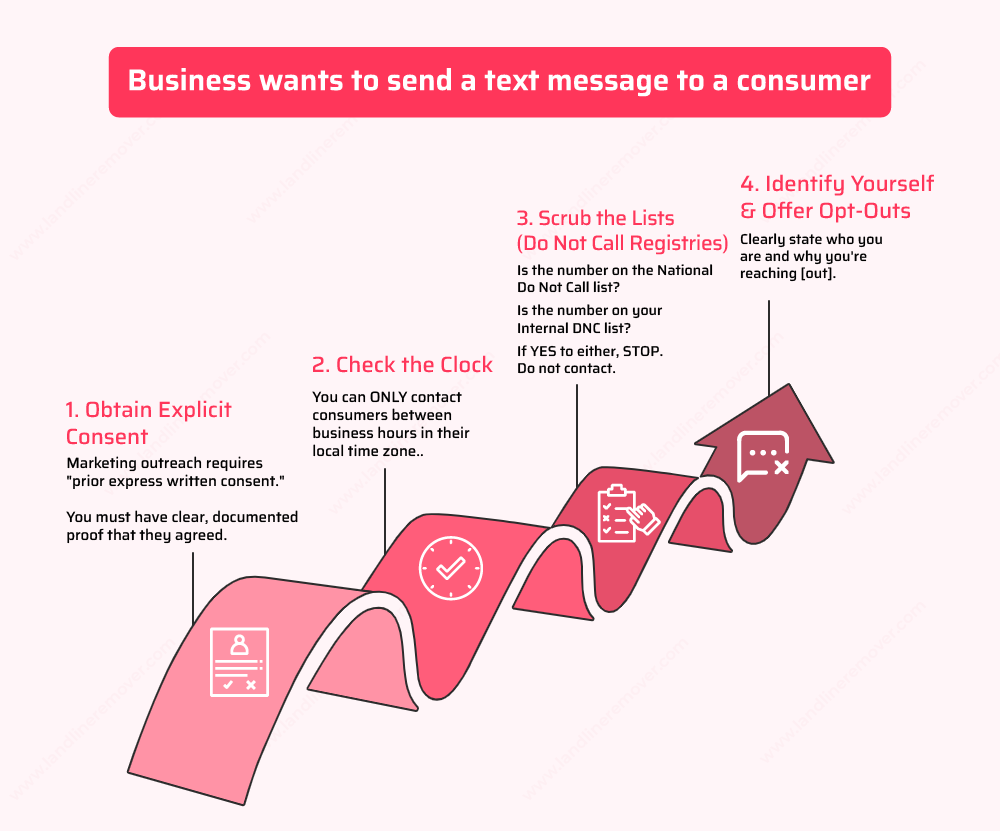
business_wants_to_send_a_text_message_to_a_consumer

This is what compliant outreach looks like.

Here is what it basically says:

  • Never call or text an individual without proper consent
  • Don’t use auto-dialers
  • Respect DNC lists
  • Honor opt-outs immediately

If you break these rules, fines are heavy. 

Now, imagine if you sent 5,000 messages to the wrong number; it’s not a small mistake. It’s a financial disaster. 

Therefore, you must do phone number validation.

What is Phone Number Validation?

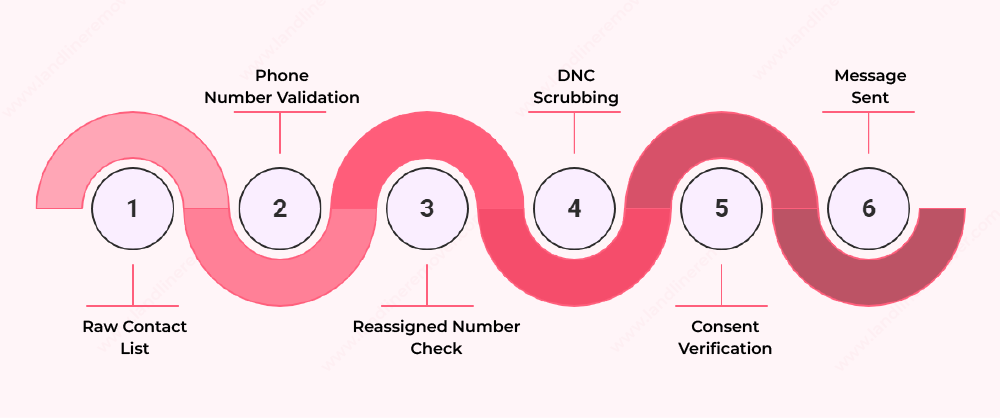
Phone number validation is the process of verifying whether a phone number is real, active, and safe to contact. It includes line type detection, geolocation, reassignment number checks, DNC status verification, carrier type validation, and screening against known litigators and TCPA litigators.

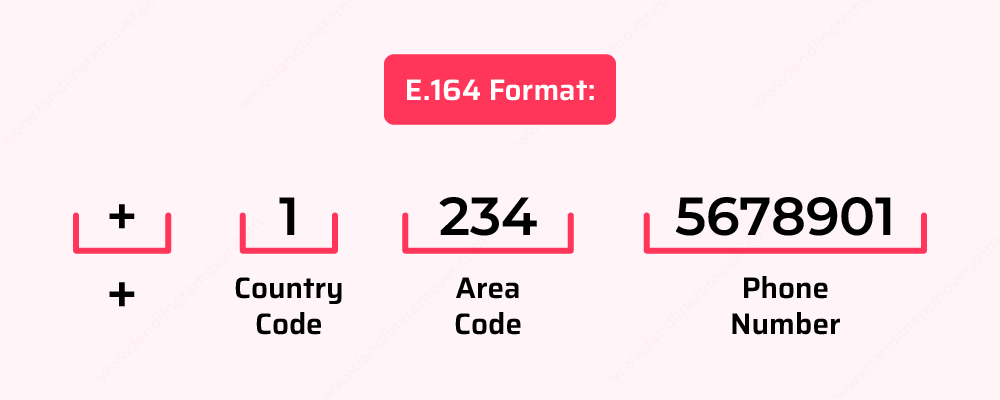
In short, it helps ensure compliance with state and federal Do Not Call (DNC) lists, making it essential for SMS marketing, lead generation, and customer outreach. Validation also confirms that numbers are formatted correctly according to the E.164 standard and are capable of receiving calls and text messages.

Verifying that a number exists and can accept messages is critical before sending any communication. It helps keep your contact list clean, ensuring you reach the right people at the right time while minimizing the risk of lawsuits.

what_is_phone_number_validation

Which Validation Types are Perfect for TCPA Compliance?

If your main focus is TCPA compliance, here are two types of phone number validation for TCPA are most useful.  

1. DNC and TCPA Only Validation

In this, your phone number validation tool screens your contact list against national and state Do Not Call registries, known litigators, and frequent DNC complainers. Keep in mind that it does not verify whether a number is real or in service; it only flags numbers that pose potential legal risks. For this reason, you should apply this filter only when you are already confident that your contact list is accurate and simply want to minimize the risk of lawsuits.

2. Reassigned Number Database

Do you frequently send automated texts or contact older leads? If so, your phone number validation tool must be capable of querying the Reassigned Number Database (RND). This checks whether a specific number has been reassigned to a new person since the original owner opted in. If it has, you should stop contacting that number, even if the previous owner never unsubscribed. The reason is simple: contacting a reassigned number is a major trigger for TCPA complaints.

There are phone validation tools such as Landline Remover, Phone Validator, and Televalidator that can operate as standalone tools or alongside a full phone validation setup.

What is the Real Cost of Not Validating Numbers?

Let’s understand it through a simple example.

Suppose you send 10,000 text messages.

Now imagine 5% of phone numbers are invalid, reassigned, or didn’t give proper consent.

Calculate risky messages.

5% of 10,000 text messages = 500 risky text messages. 

Now, as per TCPA, violations and fines can be

$500 per violation (minimum) and up to $1,500 (willful violation)

Now, consider a $500 fine for each.

500 * $500 = $250,000

If the fine is $1,500 for each,

500 * $1,500 = $750,000

And it is just from one campaign. 

Now, compare this cost to the cost of validating numbers before sending. It is usually a tiny fraction of that amount. 

Real Life Examples

The $300 Million Record: In August 2023, the Federal Communications Commission (FCC) levied a record-breaking fine of nearly $300 million against a group of companies operating an auto-warranty robocall scheme.

The $925 Million Verdict: A few years ago, a dietary supplement company called ViSalus was hit with a $925 million jury verdict for making millions of robocalls without proper consent.

The Class Action Surge: In the first half of 2025 alone, TCPA class-action lawsuits jumped by 95%. Lawyers are actively hunting for companies making mistakes.

So, the real question is not whether we can afford validation, but it is “Can we afford not to? ”

Many businesses believe that having opt-in forms means they’re good to go. It’s great, but understand that consent only works if

  • The number belongs to the right person
  • It is still active
  • The number has not changed owners

So, here is the harsh reality. Consent is the starting point, but validation is protection.

How Phone Number Validation Protects Your Business from TCPA Lawsuits

Let’s connect all the dots and understand how phone number validation for TCPA reduces legal exposure. 

  • It stops you from sending messages to invalid numbers. Of course, typos happen, but validation tools catch missing digits, incorrect country codes, and fake numbers.
  • It filters out landlines and VoIP numbers. Sending SMS to these numbers can trigger a compliance problem. Phone number validation performs line type detection and prevents fines, fraud, or spam traps.
  • Some phone number validation tools also check for reassigned numbers. If the ownership changes, this validation tool sends you an alert.
  • It helps you maintain clean audit trails. If you ever face a complaint, showing you’ve used validation systems strengthens your defense. It shows you acted responsibly, which matters in court.

Compliance is not just about regulations. Carriers such as AT&T, Verizon, and T-Mobile monitor traffic patterns. So, if you send text messages to high volumes of invalid numbers, generate lots of complaints, and trigger spam filters, the carrier can do the following:

  • They can block your numbers.
  • Shut down your messaging account.
  • Throttle your campaign.

Phone number validation keeps your sender reputation clean. Besides, it improves the performance of your campaign. When you remove bad numbers from your contact list, delivery rates go up, engagement improves, click-through rate increases, and opt-out rate drops. 

Here is the compliance protection funnel.

how_does_the_phone_number_validation_for_tcpa_reduce_legal_risk

Each layer removes risk. If you skip validation, you’re removing a critical filter.

How Often Should You Validate Numbers?

Compliance is not a one-time process. You have to do it continuously. 

Situation When to Validate
New Sign-Up Instantly 
Before Large Campaign 24 to 48 hours before
Long-Term Stored Data Every 30 to 60 days
Reactivation Campaign Always

If you skip validation:

  • You might send a text message to the wrong person
  • Reach out to someone who never gave you consent
  • Keep outdated or fake contacts in your pipeline
  • Attract attention from law firms that are watching for TCPA violations
  • Call someone at an inappropriate time

Friendly Reminder

Don’t treat TCPA compliance like an option. If your business gets hit with a TCPA lawsuit, it won’t just cost money; it can also damage trust with customers and partners.

How to Implement Phone Number Validation the Right Way?

Here is the simple action plan for implementing phone number validation. 

  1. Do real-time validation through a phone validation API that connects with your website, CRM, or application. Whenever a lead/customer fills out website forms, checkout pages, or lead-capture forms, validate their numbers.
  2. Before sending any large campaign, scrub your list.
  3. Use a phone number validation tool that regularly checks for DNC status, known litigators, line type, and ownership changes.
  4. Keep a log of everything. It includes consent timestamps, validation results, scrubbing dates, etc. 

You can validate phone numbers through bulk uploads or a real-time API. You should choose the option that best fits your workflow.

Simplify Phone Number Validation for TCPA With Landline Remover

TCPA compliance is not something your business can afford to ignore. The law carries serious penalties, and a single wrong message could cost you thousands. That’s why using a phone number validation tool like Landline Remover is a smart move. It helps you identify landlines, VoIP numbers, and other invalid or risky contacts, reducing compliance risk before you send a single text message.

Remember: A clean contact list means safer campaigns and better results. 

Protect your brand and stay compliant with Landline Remover. Want to try our phone number validation tool with no commitment? Register for a free trial and see how it fits into your workflow.

Frequently Asked Questions

Buying third-party lists is risky. You don’t really know how that “consent” was collected or if it even applies to you. Some numbers might’ve changed hands, landed on a DNC list, or be outdated. And if you text them anyway, that’s when complaints start rolling in.

Start with the basics. Teach your team to collect clear written consent and actually store proof of it. Not screenshots buried in someone’s inbox. They should also double-check lists before campaigns and process opt-outs fast. I’ve seen small oversights turn into big legal headaches. It’s avoidable.

Bad numbers drag everything down. Validation clears out landlines, dead numbers, and sketchy VoIP lines before you hit send. That means fewer bounces, fewer carrier flags, and more texts reaching real people. Which, obviously, is the whole point.

Yeah, most tools integrate with your SMS platform or CRM via APIs. So numbers get checked in real time when someone signs up. You can also clean older lists before a big campaign. It saves a lot of trouble later.